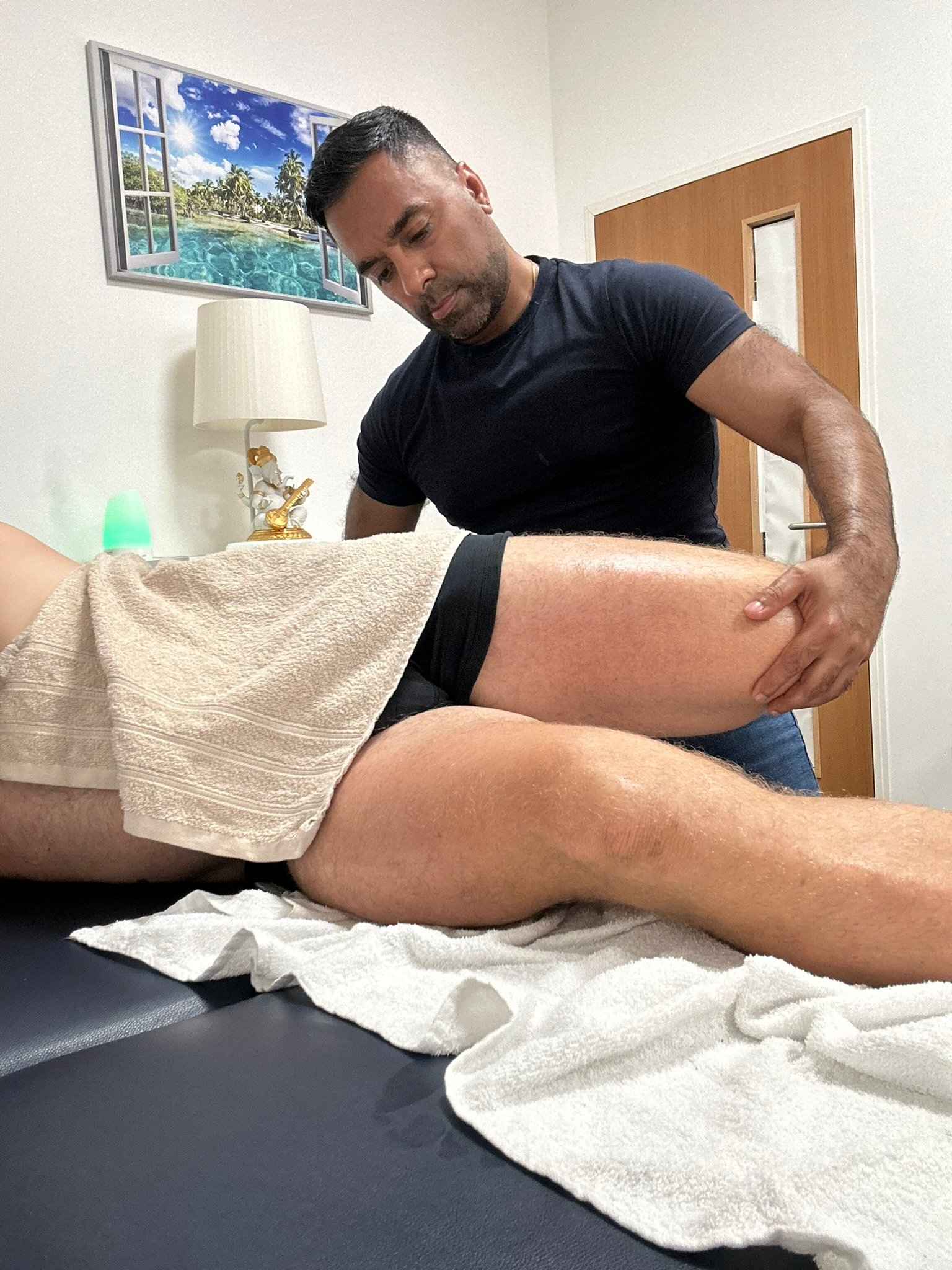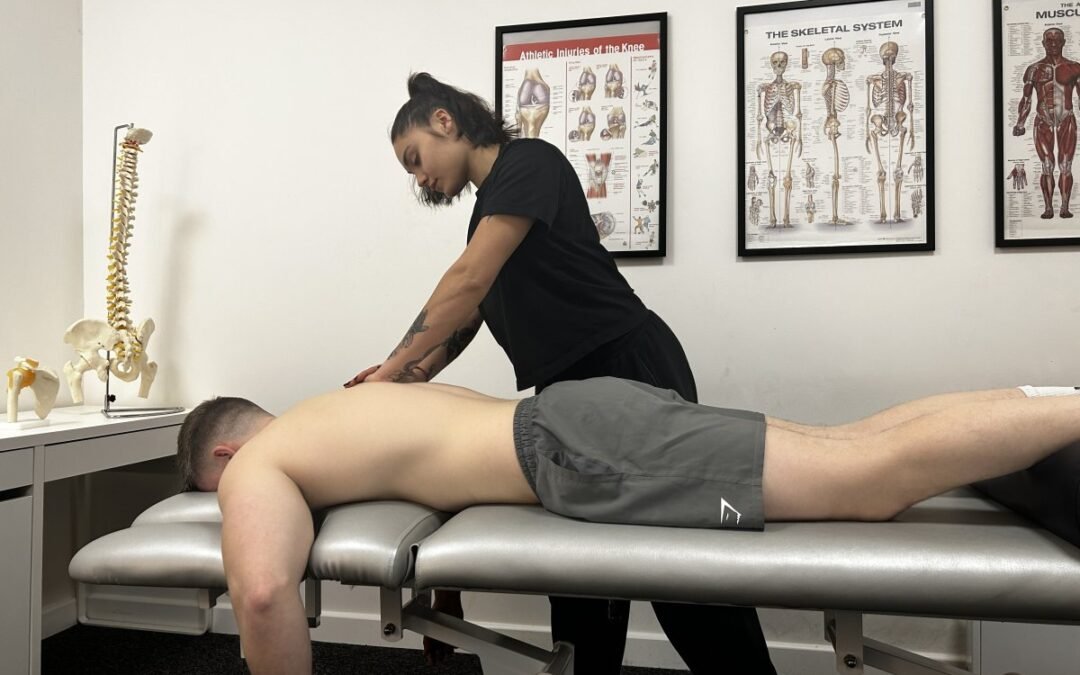
What if the key to unlocking your chronic neck stiffness isn’t just more pressure, but a more sophisticated approach to how your nervous system and muscles actually recover? Many of us spend our working weeks hunched over screens, enduring a persistent ache in our shoulders that stretching alone cannot reach. It is common to feel overwhelmed by high stress levels and confused about whether you need a firm sports treatment or something more soothing to truly resolve your discomfort.
You shouldn’t have to choose between clinical results and mental ease. A professional Swedish Sports Massage at our Leeds clinic integrates precise anatomical knowledge with therapeutic techniques to lower cortisol and improve circulation. By choosing a treatment rooted in physiological expertise, you can achieve significant physical relief whilst regaining the mental clarity needed for your busy life. This guide will walk you through exactly what to expect at your appointment, from the initial consultation to the tailored recovery plan that ensures your long-term vitality.
Key Takeaways
- Understand why a professional Sports massage is a clinical foundation for recovery, using specific strokes to stimulate blood flow rather than just providing surface-level relaxation.
- Learn how the five classic massage techniques work to “flush” metabolic waste from your tissues, helping to reduce physical fatigue and muscle soreness.
- Discover the neurological benefits of therapeutic touch, including how it lowers cortisol levels to help manage the stress associated with modern office work.
- Identify which modality best suits your needs by comparing the holistic, full-body assessment of Swedish techniques with the targeted pressure of deep tissue or sports massage.
- Explore our clinical consultation process in Leeds, where postural analysis ensures your treatment plan is tailored to your specific physical recovery goals.
Understanding Sports Massage: More Than Just a Spa Treatment
Whilst many people associate a Sports massage with scented candles and luxury hotel breaks, its origins are far more rigorous and clinical than the average spa menu suggests. Developed by Per Henrik Ling in the early 19th century, this method was originally part of a comprehensive medical gymnastics programme designed to improve physical vitality through movement and manipulation. Ling’s work established a historical authority that remains the bedrock of Western manual therapy today. Rather than being a mere "pampering" session, this approach is a therapeutic system specifically engineered to energise the body by stimulating circulation and improving oxygen flow in the blood.
In a professional clinical environment, we view these techniques as essential tools for physical rehabilitation. We often integrate these methods as the foundational phase of a physiotherapy Leeds recovery programme. This is because effective recovery requires a body that is receptive to change. By addressing the body as a whole, we can identify the root causes of discomfort that more localised treatments might overlook. The various Swedish massage techniques employed by our specialists are designed to facilitate this holistic assessment whilst providing immediate symptomatic relief.
The Clinical Philosophy of Classic Massage
The superficial layers of muscle often act as a protective barrier, tensing up in response to stress or injury. If a therapist attempts to apply deep pressure immediately, the body’s natural guarding mechanism can cause the muscles to contract further, making the treatment counterproductive. Our Leeds therapists use Swedish techniques to gently warm these superficial tissues, preparing the body for deeper work without triggering a stress response. This process is vital for engaging the parasympathetic nervous system, the state where the body can finally "rest and digest," allowing for genuine cellular repair.
During this phase, your practitioner is doing more than just relaxing you. They are using their hands as highly tuned sensors to assess tissue quality, identifying areas of hypertonicity, temperature changes, or restricted fascia. This assessment informs the rest of your treatment plan, ensuring that every subsequent stroke is purposeful and tailored to your specific anatomy.
Why it is the Foundation of Modern Manual Therapy
Modern sports and remedial therapies did not emerge in a vacuum; they are essentially evolutions of these classic rhythmic strokes, adapted for specific athletic pathologies. The rhythmic pressure applied during a session plays a crucial role in "resetting" the body’s pain receptors. By providing a consistent, predictable stimulus to the skin and muscles, we can often interrupt the cycle of chronic pain that plagues office workers and athletes alike. Swedish massage is a systematic manipulation of soft tissue for neuro-muscular health. It serves as the bridge between general wellness and clinical intervention, providing a versatile framework that supports everything from injury prevention to mental clarity.
The Five Classic Techniques: How Sports Massage Influences Physiology
Understanding the mechanics of a Sports massage requires looking beneath the surface at how specific strokes interact with your anatomy. Rather than a random sequence of movements, each technique is a deliberate clinical intervention designed to produce a physiological "flush" effect. This process helps the body eliminate metabolic waste products like lactic acid whilst flooding the tissues with fresh, oxygenated blood. It’s a methodical way to reset the body’s internal environment, moving you from a state of high-tension "fight or flight" into a restorative parasympathetic mode.
During your session, your therapist will adjust their pressure with clinical precision. For instance, areas with prominent bone structures, such as the shins or the spine, require a lighter touch to avoid discomfort, whereas dense muscle groups like the glutes or quadriceps can benefit from firmer engagement. This expertise ensures the treatment remains effective without being intrusive. To maintain your comfort and professional boundaries, we utilise meticulous draping techniques and high-quality oils, which reduce friction and allow for the smooth, continuous strokes essential for lymphatic drainage. If you’re unsure which approach fits your recovery goals, comparing Swedish, Deep Tissue, or Sports Massage can help clarify the right path for your specific needs.
Effleurage and Petrissage: The Core of Circulation
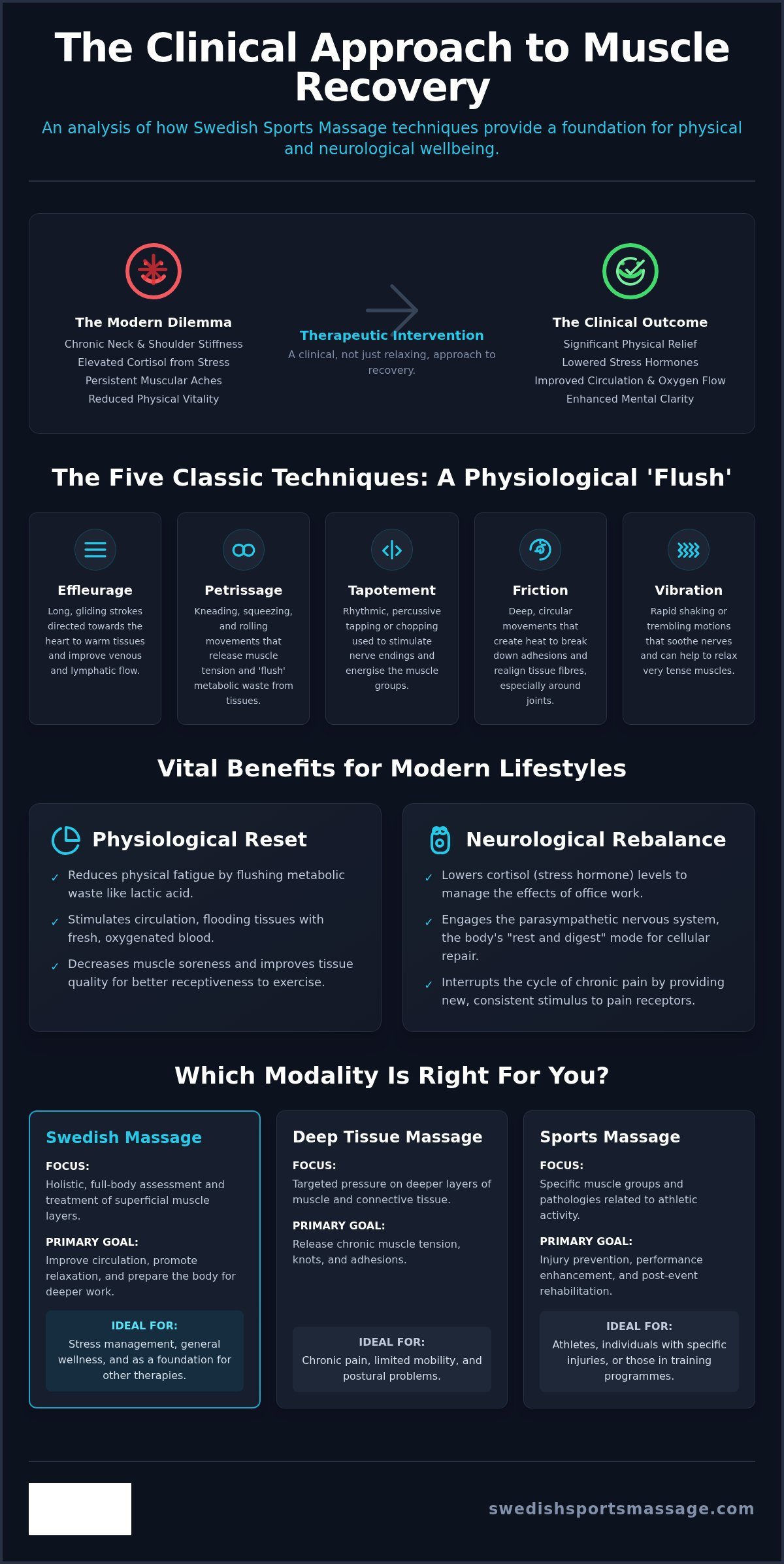
Effleurage consists of long, gliding strokes directed towards the heart, a technique specifically chosen to aid venous return and lymphatic flow. These movements serve as a clinical warm-up for the fascia, the connective tissue that surrounds your muscles. Once the fascia is supple, we transition to petrissage, a core component of a traditional swedish massage. This involves kneading and squeezing movements that mobilise deeper tissues, improving muscle elasticity and breaking down the physical manifestations of chronic stress. These two strokes form the foundation of our circulation-boosting strategy.
Friction, Tapotement, and Vibration for Recovery
To address more stubborn issues, we employ friction, which uses small, circular movements to break down minor adhesions between muscle fibres. When a more invigorating response is required, such as in a sports massage leeds session, tapotement-a rhythmic tapping-is used to stimulate the nervous system and increase local blood flow. Finally, vibration involves rapid shaking movements that encourage tight muscle fibres to release their grip, promoting a state of total physical ease. If you’re ready to experience this methodical approach to wellness, you can book your initial assessment at our Leeds clinic today.
Key Health Benefits: Why Therapeutic Massage is Vital for Modern Lifestyles
Modern lifestyle demands often leave our bodies in a state of perpetual alertness. Sleep alone cannot resolve this systemic fatigue. Whilst the techniques discussed previously provide the mechanical "how," the physiological outcomes explain the "why." According to an official overview of Swedish massage, this therapy is highly effective for both immediate relaxation and long-term symptom management. By systematically reducing the production of cortisol, the body’s primary stress hormone, we can facilitate a significant boost in serotonin and dopamine levels. This biochemical shift is essential for anyone looking to transform their physical and mental well-being.
The benefits extend far beyond mood regulation. For the thousands of office workers in Leeds city centre, "Tech Neck" and postural fatigue are more than minor annoyances; they are precursors to chronic pain. A professional swedish massage addresses these issues by improving joint flexibility and increasing your range of motion (ROM). By releasing the tight connective tissues that limit your movement, we help you regain the physical freedom necessary for an active life. Additionally, the rhythmic strokes support your immune system by aiding lymphatic drainage, which helps your body’s natural filtration system process metabolic waste more efficiently.
Mental Health and Stress Regulation
The link between physical touch and the reduction of clinical anxiety symptoms is well-documented in manual therapy. When the body feels safe and supported, the nervous system can finally disengage from its "fight or flight" response. Regular sessions help regulate your circadian rhythms, making it easier to fall into the deep, restorative sleep necessary for peak cognitive function. Research indicates that a 60-minute Swedish massage can significantly lower heart rate and blood pressure. This creates a window of calm that allows your mind to reset, providing a level of mental clarity that is often impossible to achieve through rest alone.
Physical Rehabilitation and Pain Management
Managing chronic conditions like fibromyalgia or persistent lower back pain requires a gentle yet methodical approach. We use controlled mobilisation to ease discomfort without overstimulating sensitive tissues. This is particularly beneficial after intense gym sessions or long runs, as it helps with the "flushing" of lactic acid and other toxins that contribute to delayed onset muscle soreness. By addressing minor strains before they become debilitating, swedish massage acts as a vital preventative measure against repetitive strain injuries (RSI). It ensures that your recovery plan remains proactive rather than merely reactive to pain.
Comparing Modalities: Is Swedish, Deep Tissue, or Sports Massage Right for You?
Choosing the right treatment often feels like a guessing game. Many people assume they need the most intense pressure available to see results, but this isn’t always the case. A swedish massage serves as an excellent entry-level treatment because it allows your therapist to perform a comprehensive full-body assessment. Whilst deep tissue massage leeds focuses on specific chronic knots with high-intensity pressure, the holistic flow of Swedish techniques provides a broader overview of your musculoskeletal health. It helps us identify areas of tension you might not even have noticed yet.
If you’re currently experiencing high levels of mental stress alongside physical stiffness, the systematic approach of a swedish massage is often the most effective choice. It doesn’t force the body to defend itself against intense pressure, which can sometimes be counterproductive if your nervous system is already overstimulated. Instead, it coaxes the muscles into a state of receptivity, making it a powerful tool for both recovery and diagnostic insight. To find the best path forward for your specific symptoms, you can book a tailored assessment at our Leeds clinic.
Swedish vs. Deep Tissue: The Pressure Myth
There is a common misconception that Swedish massage is too light to be effective for those with "real" pain. In reality, a firm Swedish session can often be more productive than an overly aggressive deep tissue session that leaves you tensing against the therapist’s hands. If you jump straight into intense work without a proper warm-up, you risk rebound tenderness. This is where the muscles contract in response to perceived trauma, potentially worsening your stiffness the next day. We often recommend a hybrid approach for our clients. We use rhythmic Swedish strokes to warm the superficial tissues before applying targeted pressure to deeper adhesions. This ensures the treatment is thorough without being unnecessarily painful.
Swedish vs. Sports Massage: Relaxation vs. Performance
Sports massage is primarily concerned with functional correction and specific injury sites. In contrast, a swedish massage focuses on the entire system, ensuring that the nervous system is as recovered as the muscles. For runners or athletes in their off-season or taper weeks, the holistic approach is often superior. It allows for a psychological switch-off that is just as vital for performance as physical repair. You cannot perform at your peak if your cortisol levels remain high, even if your hamstrings feel loose. Integrating these sessions into your recovery programme helps maintain a balance between high-intensity training and the deep rest required for cellular repair.
Tailored Sports Massage in Leeds: Our Clinical Approach
At Swedish Sports Massage, Hitanshu, Amelia & Niraja lead our practice with a philosophy that elevates the traditional swedish massage beyond a simple relaxation session. By blending clinical physiotherapy principles with empathetic, therapeutic touch, they ensure every movement serves a specific purpose in your physical recovery. This approach recognises that whilst relaxation is a vital outcome, the underlying goal is often to resolve the functional imbalances caused by modern life. Whether you are an athlete or a desk-based professional, our team acts as a knowledgeable partner in your health journey, focusing on root causes rather than just surface symptoms.
Your experience begins with a thorough initial consultation designed to build immediate trust and clarity. Unlike a generic spa visit, this involves a detailed postural check and a comprehensive review of your medical history. We look at how you stand, sit, and move to determine which muscle groups are overcompensated and which are inhibited. Located in Burley, Leeds, our clinic is easily accessible and features a streamlined online booking system for your convenience. To ensure professional care is sustainable, we are accepted by major UK health insurance providers for reimbursement, allowing you to integrate regular treatment into your long-term wellness plan without financial stress.
What to Expect at Our Leeds Clinic
When you arrive, you will find a professional, calm environment that prioritises your privacy and comfort. We provide a dedicated clinical space that avoids the noise of a busy gym or the over-scented atmosphere of a spa. Our accreditation by the Federation of Holistic Therapists (FHT) and the Health and Care Professions Council (HCPC) provides peace of mind that your care meets the highest professional standards. We customise the pressure and focus areas for every individual session. If your tissues are particularly sensitive, we adapt our Sports massage techniques to ensure the experience remains soothing whilst still achieving the necessary physiological "flush" discussed in earlier sections.
Booking Your Path to Recovery
Taking the first step towards a pain-free lifestyle is a significant move for your physical and mental well-being. We understand that every recovery journey is unique, which is why we offer various session lengths to suit your schedule and specific needs, including 30, 45, and 60-minute appointments. Our goal is to make the path to relief feel clear, manageable, and expertly guided. If you are ready to lower your cortisol levels and regain your physical vitality, our specialists at Swedish Sports Massage are ready to help. Book your clinical Sports massage at our Leeds centre today and experience a more sophisticated approach to soft tissue therapy.
Take the Next Step Towards Lasting Physical Vitality
Integrating therapeutic touch into your recovery plan is more than a luxury; it’s a strategic investment in your long-term health. We’ve explored how the systematic strokes of a Sports massage facilitate circulatory health and neurological ease, providing a necessary counterpoint to the stresses of modern life. By choosing a clinic led by qualified physiotherapists, you’re ensuring that every technique is applied with anatomical precision and a focus on your specific postural needs.
Our FHT and HCPC accredited therapists are here to guide you from your initial assessment through to a state of restored mobility. With health insurance reimbursement available for major UK providers, clinical excellence is more accessible than ever. Don’t let chronic stiffness or high cortisol levels dictate your quality of life. Book your tailored Sports massage in Leeds at our expert physiotherapy-led clinic today. We look forward to helping you rediscover your physical potential and mental clarity.
Frequently Asked Questions
What is the difference between Swedish and deep tissue massage?
Swedish massage focuses on the superficial layers of muscle and overall circulation using long, gliding strokes, whilst deep tissue massage targets the deeper musculature to break down chronic adhesions. If you’re looking for a systemic "reset" and improved blood flow without intense discomfort, the Swedish approach is the ideal clinical choice. It prioritises the nervous system’s recovery alongside physical ease.
Do I have to undress completely for a Sports massage?
You don’t have to undress completely; most of our clients choose to keep their underwear on during the session. Your comfort is our priority, and we use professional draping techniques with towels to ensure your privacy is maintained at all times. We only uncover the specific area of the body being treated to allow for effective soft tissue manipulation.
Can I claim Sports massage on my private health insurance?
Yes, many of our clients successfully claim their treatment costs back through major UK health insurance providers. Because our therapists are accredited by the FHT and HCPC, our clinical services often meet the requirements for reimbursement. We provide a detailed receipt after your appointment which you can submit directly to your insurer for processing.
How often should I get a Sports massage for stress relief?
For consistent stress management and to prevent postural tension from building up, we generally recommend a session every two to four weeks. This frequency helps maintain lower cortisol levels and supports your sleep hygiene. If you’re going through a particularly high-pressure period at work, a more frequent fortnightly schedule can provide the necessary mental and physical support.
Is Sports massage safe during pregnancy?
A professional Sports massage is generally safe and highly beneficial after the first trimester, provided your pregnancy is progressing normally. It is particularly effective at reducing the swelling and lower back strain often experienced during the second and third trimesters. We always recommend a brief consultation with your GP or midwife before your first appointment to ensure it’s the right choice for you.
Will I feel sore the day after a Sports massage session?
You shouldn’t experience significant soreness, though some clients report a mild sensation of "lightness" or very slight tenderness as the body processes metabolic waste. This is much milder than the recovery period associated with intense sports therapy. Drinking plenty of water after your session at our Leeds clinic will help your system flush out these byproducts more efficiently.
How long does a typical Sports massage session last at your Leeds clinic?
We offer flexible session lengths of 30, 45, or 60 minutes to accommodate your specific recovery goals and schedule. A 60-minute Sports massage is usually the best option for a comprehensive full-body treatment that addresses both physical tension and mental fatigue. Shorter sessions are perfect if you need us to focus specifically on "Tech Neck" or lower back stiffness.
Is Sports massage suitable for someone with chronic back pain?
It is an excellent choice for chronic back pain because it provides gentle mobilisation without triggering the body’s protective guarding mechanisms. By improving local blood flow and relaxing the superficial tissues, we can often reduce the baseline pain levels associated with long-term conditions. It serves as a supportive foundation for more targeted physiotherapy or rehabilitation work.